How to Measure Ring Size at Home: A UK Guide
Measure your ring size at home with a ruler, paper strip and a ring that fits. Step-by-step UK guidance, plus fixes for the mistakes that skew results.
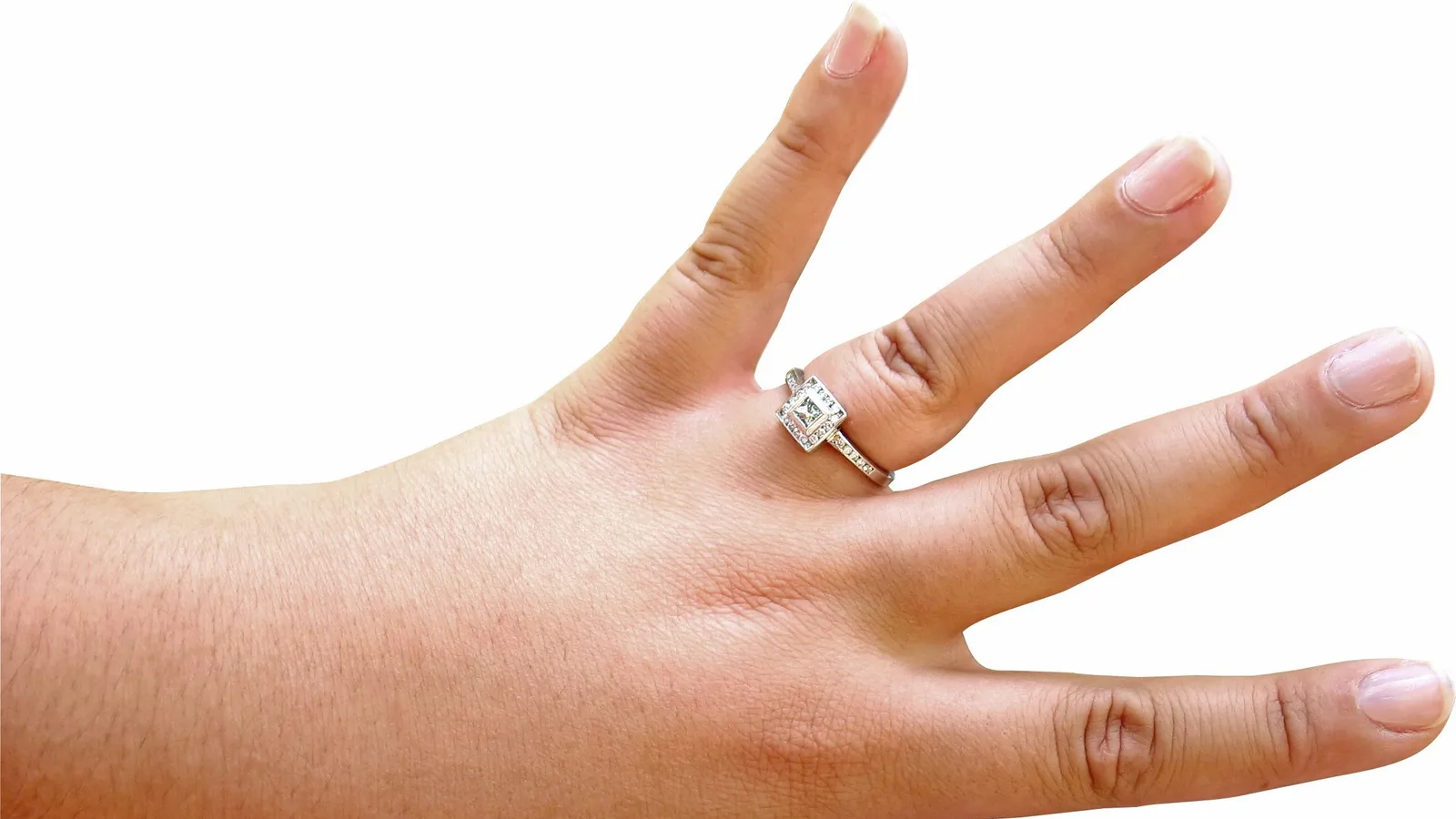
The short answer
The most reliable way to find your ring size at home is to measure a ring that already fits the exact finger you are buying for. Measure the inside diameter in millimetres, then match that figure to the retailer's own UK size chart. Measuring the inside of a ring beats wrapping something around your finger, because the metal holds its shape and you are reading a fixed circle rather than paper that can stretch or sit crookedly.
If you do not have a ring that fits, cut a narrow strip of paper, wrap it around the base of the finger, mark the overlap and measure the length in millimetres. That gives you the circumference; divide it by 3.14 to get the diameter, or use a chart that lists circumference directly.
Whichever method you use, take two or three readings, measure at normal room temperature, and check the seller's chart rather than converting from a size you remember. Half a size is a very small difference — well under a millimetre in circumference — so small errors matter.
What you need before you start
- A ring that fits
- The exact finger and hand you are buying for, if possible. A plain, narrow band gives the clearest reading.
- A ruler
- One with millimetre markings, ideally rigid metal or plastic rather than a soft tape.
- Paper strip
- About 1 cm wide and 10 cm long, cut from plain paper. Card is too stiff; string stretches.
- A fine pen
- A sharp tip makes a thinner, more accurate mark than a pencil.
- Scissors
- For cutting a clean-edged strip that will sit flat against the finger.
Method one: measure a ring that already fits
-
Choose a ring from the right finger
Use a ring the person wears on the exact finger you are buying for, on the correct hand. Fingers on the dominant hand are often slightly larger, and a ring worn on the index finger tells you nothing useful about the ring finger.
-
Check that the band is still round
A ring that has been squashed or worn oval will give a false measurement. Rest it on a flat surface and look at it from the side; if it rocks or the gap looks uneven, choose another ring.
-
Measure the inside diameter
Place the ring flat and measure from the inside edge to the inside edge across the widest point. Measure the hole, not the outside of the band: the outer measurement includes the metal and will make the ring seem bigger than it is.
-
Repeat at three angles
Take readings across the band at roughly 12, 4 and 8 o'clock and average them. If the figures differ by more than a fraction of a millimetre, the band is not round enough to measure reliably.
-
Match the diameter to the seller's chart
UK charts normally list inner diameter and circumference for each letter. Use the chart supplied by the retailer you are buying from, because published charts vary slightly. If the chart only gives circumference, multiply your diameter by 3.14.
Method two: measure your finger with paper
-
Cut a narrow paper strip
Use plain paper about 1 cm wide and 10 cm long. Card is too stiff to sit flat against the finger, and ordinary string stretches, so both skew the result.
-
Wrap it around the base of the finger
Slide the strip over the knuckle and settle it where the ring will sit. It should be snug enough not to slip off but loose enough to pass back over the knuckle without force.
-
Mark where it overlaps
Hold the join still and mark the paper where the end meets the strip. Use a fine pen rather than a pencil, which smudges and thickens the line.
-
Lay the strip flat and measure to the mark
Measure from the cut end to your mark in millimetres. If the paper has curled, press it flat without stretching it, or the reading will be too long.
-
Work out the diameter
Divide the circumference by 3.14 to get the inner diameter, then look that up on the chart. Some charts list circumference directly, which saves the calculation.
Reading UK ring sizes
UK ring sizes are letters, running from A at the smallest end through to Z, with half sizes in between. The letter corresponds to the ring's inner circumference, not its outer measurement, which is why measuring the inside of the band matters so much.
Most adult rings fall somewhere between L and Z, with many women's styles in the L to P range and many men's in the S to Z range. Half sizes exist because a full step is small — roughly 0.4 mm across the diameter — so a ring that feels slightly too tight can often be corrected by going up half a size rather than a whole one. The bigger jump between letters is why guessing is risky: an M and an O look close on paper but feel quite different on a finger.
What commonly goes wrong
- Measuring the outside of the band. Use the inside edge every time.
- Using stretchy string or a fabric tape. Both can give a circumference that is too long, so the ring arrives too big.
- Measuring cold hands. Cold fingers can measure half a size smaller than usual. Warm your hands first.
- Taking only one reading. Take three and use the average. If they disagree, start again with a fresh strip.
- Borrowing a ring from the wrong finger or hand. Fingers can differ by a full size or more across one hand.
- Ignoring the knuckle. If your knuckle is wider than the base of your finger, measure both. The ring has to clear the knuckle, so you may need the larger figure; a jeweller can advise on keeping a looser ring secure.
- Forgetting the band width. A wide band covers more of the finger and feels tighter. Many jewellers suggest going up half a size for bands around 6 mm or wider.
- Assuming sizes travel. A ring bought abroad or from an overseas site may use a different scale entirely.
How a well-fitting ring should feel
A ring that fits properly should slide over the knuckle with slight resistance, not a struggle, and sit at the base of the finger without pinching or leaving a deep groove. It should turn with a little friction; a ring that spins freely is probably too big.
It should also come off with a gentle twist. If you need soap every time, it is too tight. A faint mark after a day's wear is normal, but numbness, throbbing or a raised ridge in the skin is not.
Remember that the same letter feels different depending on the band. A 2 mm band and an 8 mm band of the same internal diameter will not sit the same way, so always judge fit on the style you are actually buying.
Measuring for a surprise
If the ring is a gift, borrow one they wear on the correct finger and measure the inside diameter. Note down which hand and which finger it came from, and be careful to put it back exactly where you found it.
A photograph of the ring beside a ruler is a useful backup, but the ruler needs to be flat in the same plane as the ring; shot at an angle, perspective makes the ring look larger or smaller than it is. Guessing from a ring worn on a different finger is how most surprise rings end up needing to be resized.
When to let a jeweller measure you
For an expensive ring, a very wide band or a finger with a prominent knuckle, an in-person measurement is worth the trip. Jewellers use sets of sizing rings that account for width and profile, and they can tell you whether a particular band can be altered at all.
Some styles are difficult or impossible to resize — full eternity rings, tension-set designs and certain patterned or mixed-metal bands, for example — so getting the size right first time matters more with those. If you are buying online, check the returns policy for made-to-order or altered rings before you order, because many cannot be returned once they have been sized.
Ring sizing questions
Can I measure my ring size with string?
String can work, but ordinary household string stretches and thick string sits away from the skin, both of which make the reading too generous. A narrow paper strip is a better substitute, and measuring the inside of a ring that already fits is better still.
Should I size up or down if I am between sizes?
There is no single rule. Wide bands feel tighter, so going up half a size is often sensible; very narrow bands may sit better at the smaller size. Ask the retailer how their sizing runs before you commit, especially if the ring cannot be resized.
Does ring size change over time?
Yes. Weight changes, pregnancy, age, temperature and even the time of day can alter finger size slightly. If it has been a year or more since your last measurement, or your ring has started to feel different, measure again.
Can I use a ring from my other hand?
Not reliably. The same finger on the other hand is often a different size, and the dominant hand tends to be slightly larger. Use a ring from the exact hand and finger, or measure the finger directly.
Do UK and US ring sizes use the same numbers?
No. UK sizes use letters with half sizes, while US sizes use numbers. The two scales do not translate perfectly, and retailers' charts vary, so always use the specific seller's chart rather than a remembered conversion.
Why does a wide ring feel tighter than a thin one?
More metal touches the finger and the band sits further up the finger, so there is less room for the skin to give. Many people need half a size larger in a band of around 6 mm or more than in a narrow band.
Related articles
The Best Way to Clean Silver at Home
Learn the best way to clean silver at home: gentle washing for light dirt, polish for tarnish, the foil method for intricate pieces, and what to avoid.
How to Clean Gold-Plated Jewellery Without Wearing Off the Gold
Clean gold-plated jewellery safely with lukewarm water, mild soap and a soft brush, plus what to avoid and how to slow the plating wearing away.

How to Layer Necklaces: A Simple Guide to Getting It Right
Learn how to layer necklaces so the strands sit evenly without tangling: pick lengths that leave a gap, mix chain weights and choose one focal point.